Goods Description:S5720-36C-EI-28S-AC(28 Gig SFP,4 of which are dual-purpose 10/100/1000 or SFP,4 10 Gig SFP+,with 1 interface slot,with 150W AC power supply)
Huawei S5720-36C-EI-28S-AC Gigabit Switch provides resilient, energy-efficient GE ports for access switching in data centers, and aggregation switching in enterprise campus networks. With twenty-eight 100/1,000 Base-X SFP ports, four combo 100/1,000 Base-T Ethernet ports and four 10G SFP+ ports, its performance enhancements include advanced processing hardware, large MAC address and routing tables; It also has multiple cards modules to meet customer s' different needs. Super Virtual Fabric (SVF) support enables intelligent virtualization, iStack clustering, and operation in N + 1 backup mode for simplified O&M and high availability. Mature IPv6 features ensure smooth migration to next-generation IP networking.
Quick Specs
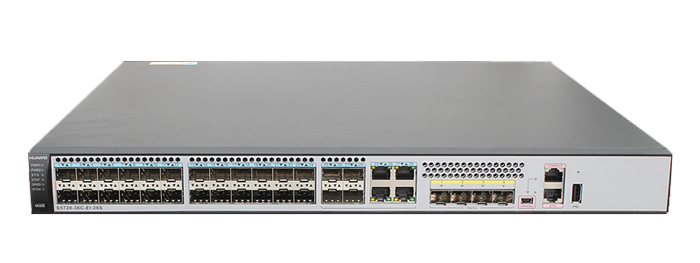
Figure 1 shows the appearance of HuaweiS5720-36C-EI-28S-AC switch.
Table 1 shows the Quick Specs.
Product Code
S5720-36C-EI-28S-AC
Fixed Ports
28 x 100/1,000 Base-X SFP (4 GE Combo), 4 x 10 Gig SFP+
Extended Slots
One extended slot
Memory (RAM)
2 GB
Flash
340 MB
MAC Address Table Size Forwarding Performance
64 MAC
Forwarding Performance
132 Mpps
Switching Capacity
598 Gbit/s
Power Supply
AC power supply
PoE
Not Supported
Voltage Required
AC
Rated voltage range: 100V to 240V AC, 50/60 Hz
Maximum voltage range: 90V to 264V AC, 47 Hz/63 Hz
Front Power Input
No No
Typical Power Consumption
47.9 W
Dimensions (W x D x H)
442 mm x 420 mm x 44.4 mm
Product Details
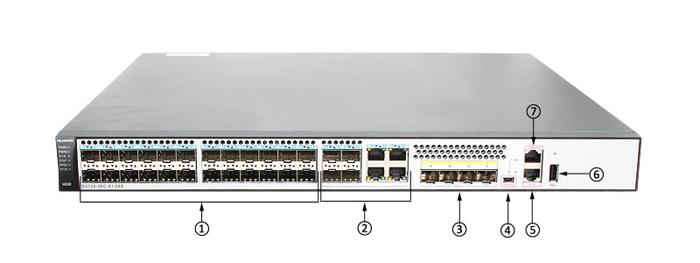
Figure 2 shows the front panel of HuaweiS5720-36C-EI-28S-ACswitch.
Note:
①
Twenty-four 100/1000BASE-X ports
②
Four combo ports (10/100/1000BASE-T + 100/1000BASE-X)
③
Four 10GE SFP+ ports
④
One mini USB port
⑤
ETH management port
⑥
One USB port
⑦
One console port
* The console port is used with a console cable. The console cable is not delivered with the switch and needs to be separately purchased if needed.
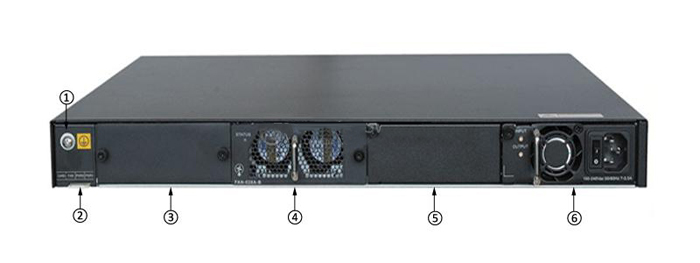
Figure 3 shows the back panel of HuaweiS5720-36C-EI-28S-ACswitch.
Note:
①
Ground screw
②
ESN label
③
Rear card slot
④
Fan slot
⑤
Power module slot 2
⑥
Power module slot 1
*The ground screw is used with a ground cable.
* You can draw the ESN label out to view the ESN and MAC address of the switch.
2 10 Gig SFP+ Interface Card(used in S5720EI series)
ES5D21X02T01
2 10 Gig RJ45 Interface Card(used in S5720EI series)
ES5D21VST000
Dedicated stack card with 2*QSFP+ interface(Including one PCS of 1M QSFP+ cable ,Used in S5720EI series)
Compare with Similar Item
Table 3 shows the comparison of Huawei S5720-36C-EI-AC, S5720-36C-PWR-EI-AC and S5720-36C-EI-28S-AC.
Models
S5720-36C-EI-AC
S5720-36C-PWR-EI-AC
S5720-36C-EI-28S-AC
Fixed Ports
28 x 10/100/1,000 Base-T (4 GE Combo SFP), 4 x 10 Gig SFP+
28 x 10/100/1,000 Base-T (4 GE Combo SFP), 4 x 10 Gig SFP+
28 x 100/1,000 Base-X SFP (4 GE Combo), 4 x 10 Gig SFP+
Extended Slots
One extended slot
One extended slot
One extended slot
PoE
Not supported
Supported
N Not supported
Forwarding Performance
132 Mpps
132 Mpps
132 Mpps
Switching Capacity
598 Gbit/s
598 Gbit/s
598 Gbit/s
Front Power Input
No
No
No
Power Consumption
39.5W
without PD: 48.5W, with PD: < 864.3W (PoE: 740W)
47.9W
Comparison between LI, SI, EI and HI
Huawei S5720 Series Enterprise Switches provides LI (Lite), SI (Standard), EI (Enhanced) and HI (Hyper) models for users. There are some differences among these four versions.
Click this PDF to know more.
Comparison of Huawei S5720-LI, SI, EI and HI Series Switches.pdf
Get more information
Do you have any question about the Huawei S5720-36C-EI-28S-AC switch?
VLAN assignment based on MAC addresses, protocols, IP subnets, policies, and ports
1:1 and N:1 VLAN Mapping
SuperVLAN(supported by the S5700-SI/S5700-EI/S5700-HI series)
Ring protection
RRPP ring topology and RRPP multi-instance
Smart Link tree topology and Smart Link multi-instance, providing the millisecond-level protection switchover
SEP
ERPS(G.8032)(supported by the S5700-LI/S5700-SI/S5700-EI/S5700-HI series)
STP, RSTP, and MSTP
BPDU protection, root protection, and loop protection
BPDU Tunnel
Reliability
Ethernet OAM (IEEE 802.3ah and 802.1ag)
ITU-Y.1731
DLDP
LACP
E-Trunk(supported by the S5700-SI/S5700-EI/S5700-HI series)
BFD for OSPF, BFD for IS-IS, BFD for VRRP, and BFD for PIM (supported by the S5700-EI/S5700-HI series)
MPLS features
MPLS L3VPN
MPLS L2VPN(VPWS/VPLS)
MPLS-TE
MPLS QoS
Notes: supported by S5710-EI, S5700-HI and S5710-HI
IP routing
Static routing
RIPv1, RIPv2 and RIPng,ECMP(supported by the S5700-SI/S5700-EI/S5700-HI series)
OSPF, OSPFv3, IS-IS, IS-ISv6, BGP and BGP4+ (supported by the S5700-EI/S5700-HI series)
IPv6 features
Neighbor Discovery (ND)
Path MTU (PMTU)
IPv6 ping, IPv6 tracert, and IPv6 Telnet
ACLs based on the source IPv6 address, destination IPv6 address, Layer 4 ports, or protocol type
MLD v1/v2 snooping
6to4 tunnel, ISATAP tunnel, and manually configured tunnel(supported by the S5700-SI/S5700-EI/S5700-HI series)
Multicast
IGMP v1/v2/v3 snooping and IGMP fast leave
Multicast forwarding in a VLAN and multicast replication between VLANs
Multicast load balancing among member ports of a trunk
Controllable multicast
Port-based multicast traffic statistics
IGMP v1/v2/v3, PIM-SM, PIM-DM, PIM-SSM, MSDP (supported by the S5700-EI/S5700-HI series)
QoS/ACL
Rate limiting on packets sent and received by an interface
Packet redirection
Port-based traffic policing and two-rate three-color CAR
Eight queues on each port
WRR, DRR, SP, WRR+SP, and DRR+SP queue scheduling algorithms
WRED (supported by the S5710-EI and S5700-HI)
Re-marking of the 802.1p priority and DSCP priority
Packet filtering at Layers 2 through 4, filtering out invalid frames based on the source MAC address, destination MAC address, source IP address, destination IP address, TCP/UDP port number, protocol type, and VLAN ID
Rate limiting in each queue and traffic shaping on ports
Security
User privilege management and password protection
DoS attack defense, ARP attack defense, and ICMP attack defense
Binding of the IP address, MAC address, interface, and VLAN
Port isolation, port security, and sticky MAC
MFF
Blackhole MAC address entries
Limit on the number of learned MAC addresses
802.1x authentication and limit on the number of users on an interface
AAA authentication, RADIUS authentication, HWTACACS authentication, and NAC







 PRODUCTS

)
 S5720-36C-EI-28S-AC
 Goods Description:S5720-36C-EI-28S-AC(28 Gig SFP,4 of which are dual-purpose 10/100/1000 or SFP,4 10 Gig SFP+,with 1 interface slot,with 150W AC power supply)

 More…
More…